Attached or on its own
A glass room joined to the house is an extension and follows the Class 1 rule: up to 45 m² at the rear, 25 m² of garden left. One standing on its own is a garden structure: 30 m² in total with every shed, under 3 m, behind the front wall. The join is the test.
Joined to the house or standing in the garden, and what changes either way.
Free, no obligation. One local installer prices it, not five.
- 45 m²joined to the rear of the house
- 30 m²on its own, with every shed
- 3 mheight on its own
- €80to ask the council
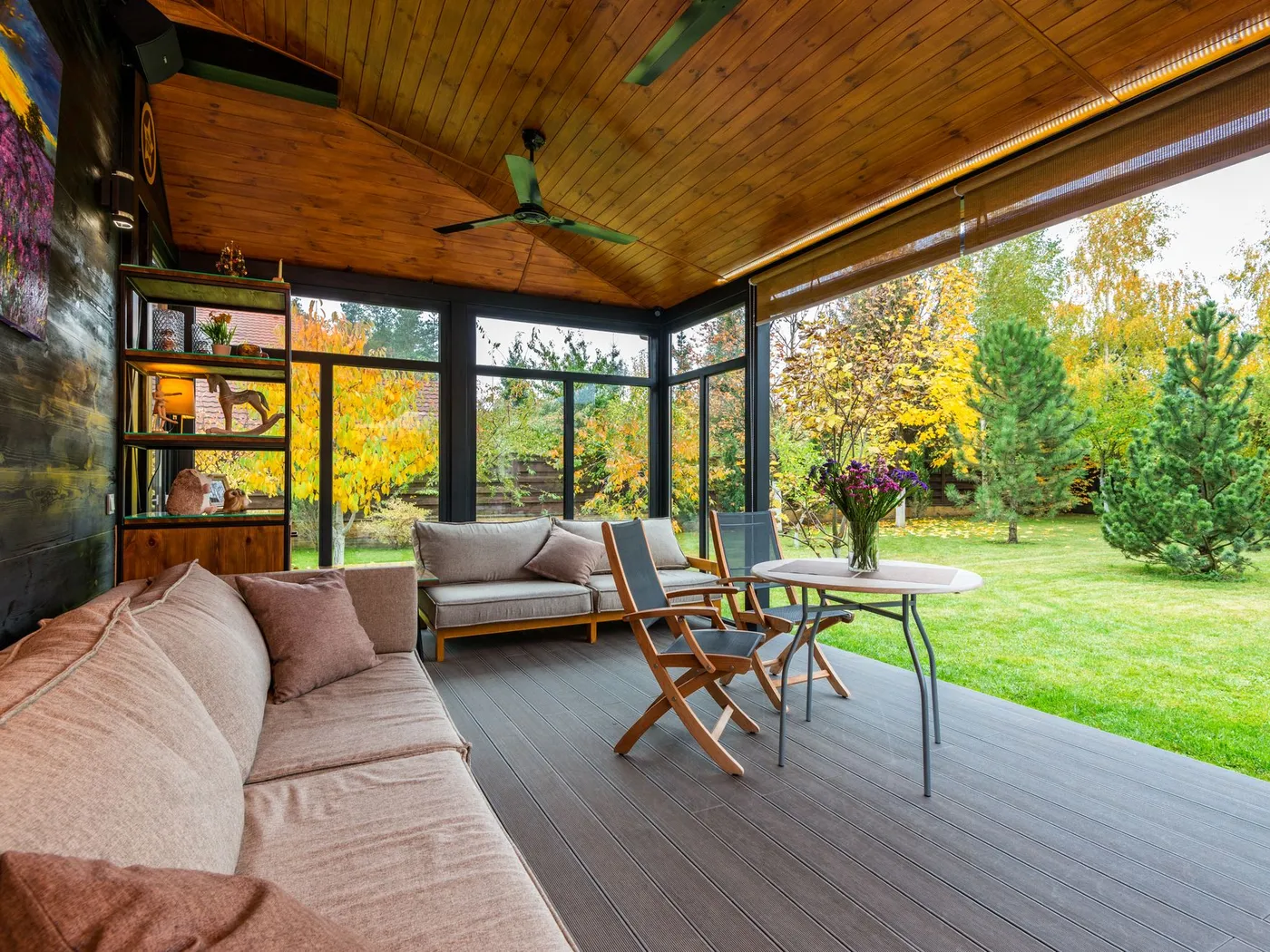
The two, side by side
Joined to the house
- Called
- An extension, conservatory included
- Size limit
- 45 m² where the house has not been extended
- Height
- Walls no higher than the rear wall
- Garden left
- 25 m² private garden
- Door to the house
- Yes, if you want one
On its own
- Called
- A garden structure
- Size limit
- 30 m² with every shed
- Height
- Under 3 m
- Garden left
- 25 m² behind or beside
- Door to the house
- No
Price your glass room
Four taps, and the price shows as you go. Your name and number come last, and only if you want an installer to price it.
A glass room with a glass roof and sliding glass walls, about 4 × 3 m, against the house: €6,240 to €11,680, from an installed deck room to a supply-only aluminium one.
How the price is worked out
The figure is what that kind and size of glass room sells for in Ireland now. Where sellers differ, you see the lowest and the highest, so a range can run from an installed room to a supply-only one. Sunrooms, conservatories and glass extensions are whole building jobs, so they show a starting price. A base, electrics, heaters and blinds are not in any of them, because they depend on your garden. Use it to plan with. It is not a quote: an installer prices yours after seeing where it goes.
What else changes
- The wall. Joined to the house, the room fixes to the wall and the join must be made watertight. On its own, the room needs its own posts on every side.
- Foundations. A free-standing room has to carry its own weight and wind load on its own base.
- Use. Joined, it can be reached through a door from the house. On its own, you walk to it.
- Neighbours. A ground-floor window in an extension sits 1 m or more from the boundary it faces.
Which rule if it only touches
A room that touches the house at one corner or a roof that runs from the wall over a free-standing room sits between the two rules. Ask the council in writing. Section 5 is a request to the council to say, in writing, whether your plan needs permission. The fee is €80 and the answer is due within 4 weeks. Send it to the council for your county, or the city council if you live in a city.
More to look at
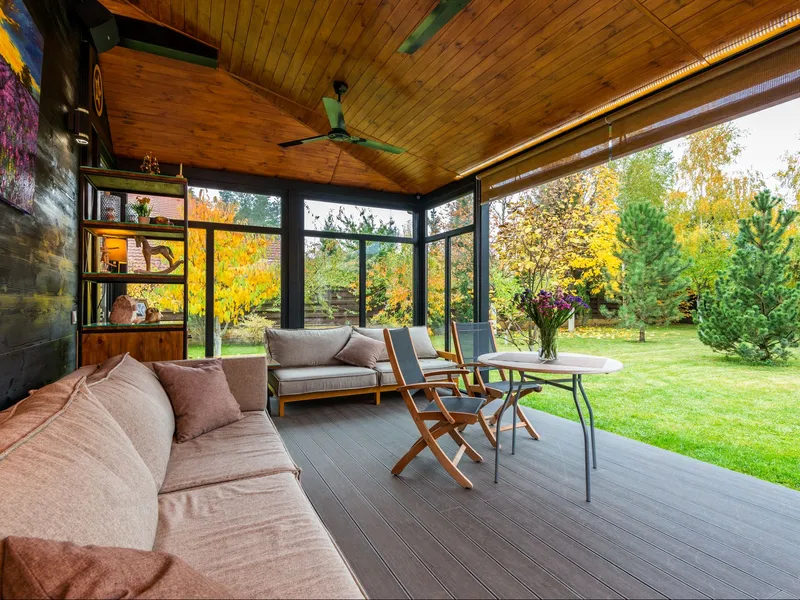 Glass garden roomsA room of glass at the end of the garden or beside the patio.
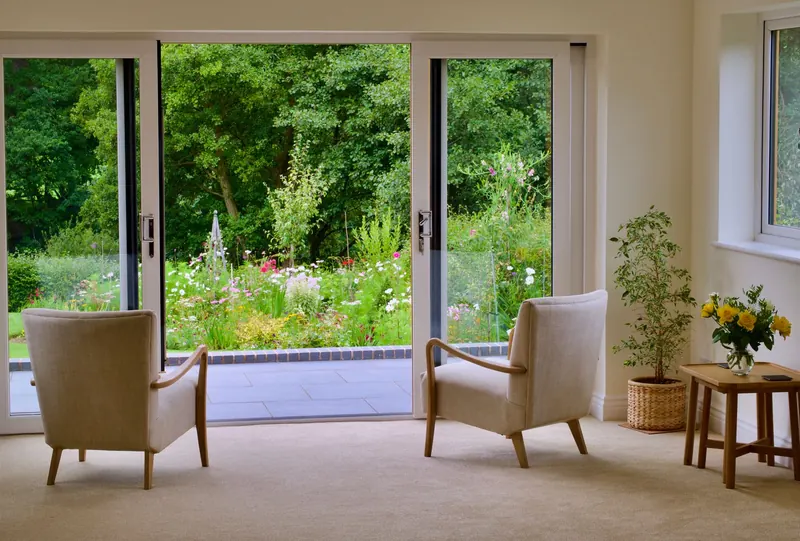 Glass extensionsA whole room of structural glass, and where it becomes a building job.
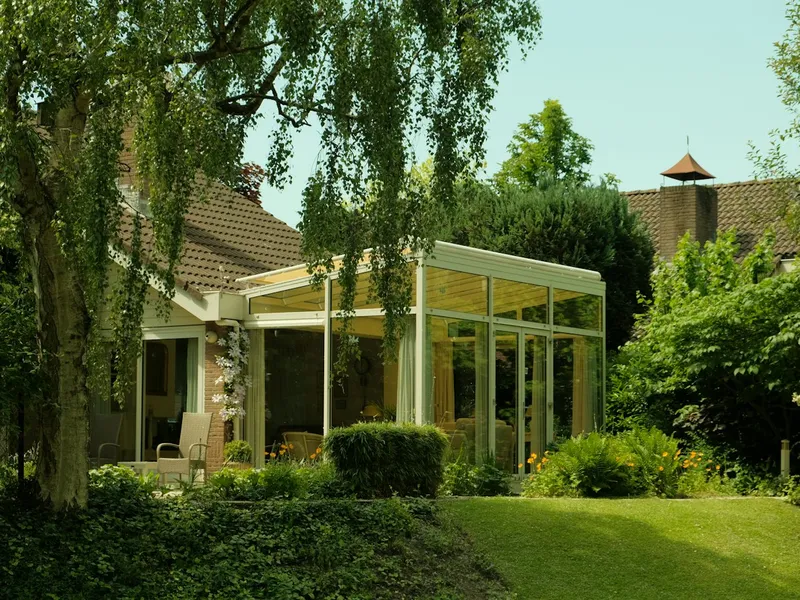 SunroomsA bright room on the back of the house, built as a proper room.Base and powerWhat the room stands on and what the electrics need.
 Size guideWhat fits in 3 × 3, 4 × 3 and 6 × 4 m.How one is fittedFrom the visit to the last pane.
Before you order
Is a glass room attached to the house an extension?
Yes. It is built on to the house, so it is judged under the extension rule: 45 m² at the rear if the house has not been extended before, and 25 m² of garden left.
Is a free-standing glass room an extension?
No. Apart from the house it is a garden structure. With every shed and store it may total 30 m², stay under 3 m and sit behind the front wall.
Which is cheaper, attached or free-standing?
The room itself costs the same either way. A free-standing room needs posts on all sides, and one joined to the house needs a wall fixing and a watertight join.
Can I put a door from the house into a glass room?
Joined to the house, yes. That is one reason it is judged as an extension.
All the pages
Kinds of glass room
Choosing and using one
Cost, rules and answers
Start with the price on screen
Tap the kind, the size and where it goes. If you then want a written price, a single glass room installer in your county rings to fix a time to see the garden.